
PolyKARD- Artificial Pericardium Tissue...
Novel polymers should make it possible in the future to create artificial elastic tissue replacements for the pericardium, heart valves, or The PolyKARD project aims to create custom-made blood vessels. It develops biomimetic polymers that mimic the mechanical properties of pericardial tissue. These polymers will be used to produce tailor-made implants via 3D printing and electrospinning. Additionally, the project will develop, for the first time, a 3D printer capable of producing Class III medical devices. The PolyKARD partners – AdjuCor GmbH, the Fraunhofer Institute for Applied Polymer Research IAP, the NMI Natural and Medical Sciences Institute, Young Optics Europe GmbH, and pro3dure medical GmbH – intend to advance the production of these implants to the point of initial clinical trials, expected in 2022.
Heart disease is one of the leading causes of death. Worldwide, around 23 million people suffer from heart failure – and this number is rising. In contrast, the number of heart transplants has stagnated at approximately 3,000 per year globally. Artificially manufactured implants could help many patients waiting for a donor organ. 3D printing of precisely fitting implants has become indispensable in medicine, for example in orthopedics and dental surgery. However, the need for research is significantly greater for implants intended to replace elastic tissue, as the requirements for the materials are high: they must retain their mechanical properties for many years, be 100% durable and biocompatible, and must not trigger rejection reactions from the immune system. The latter is particularly important for materials that are in constant contact with the body.
New polymers for modern printing technologies and customized medical technology
The PolyKARD project is developing biomimetic polymers that mimic the biological and mechanical properties of the pericardium, also known as the heart sac. The pericardium is a collagenous and mechanically extremely stable structure that surrounds the heart. Clinically, bovine or porcine pericardium is already used as a replacement for human heart valves or for the reconstruction of blood vessels. However, processing this animal tissue is expensive and does not guarantee long-term mechanical stability. Furthermore, the unreliable quality due to the significant variability between donor animals, as well as ethical and religious considerations, pose problems.
“In this project, we are developing biomimetic pericardial replacement materials that can be used, for example, for artificial pericardiums, heart valves, blood vessels, stents, tendons, or septal closures. The special feature is that the implants consist of photopolymers and can be individually manufactured using 3D printing or electrospinning. The monomers are developed as inks or resins. They only polymerize when irradiated with UV light,” explains Dr. Wolfdietrich Meyer, who heads the project at the Fraunhofer IAP in Potsdam. The research team at the Fraunhofer IAP is synthesizing a photocrosslinkable material consisting of different polyurethane segments and collagen components.
Elastic, biocompatible and durable
The newly synthesized polymers are being tested for in vitro cytotoxicity at the NMI in Reutlingen according to DIN EN ISO 10993-5. Various 3D printing manufacturing processes are used in the processing of the polymers, as well as electrospinning.At the NMI, porous structures are created using this spinning process, which can then integrate with the patient's own tissue. The resulting carrier substrates are characterized with regard to their mechanical and biological properties. Particular emphasis is placed on replicating the mechanical properties of the pericardium and on the cell ingrowth behavior.
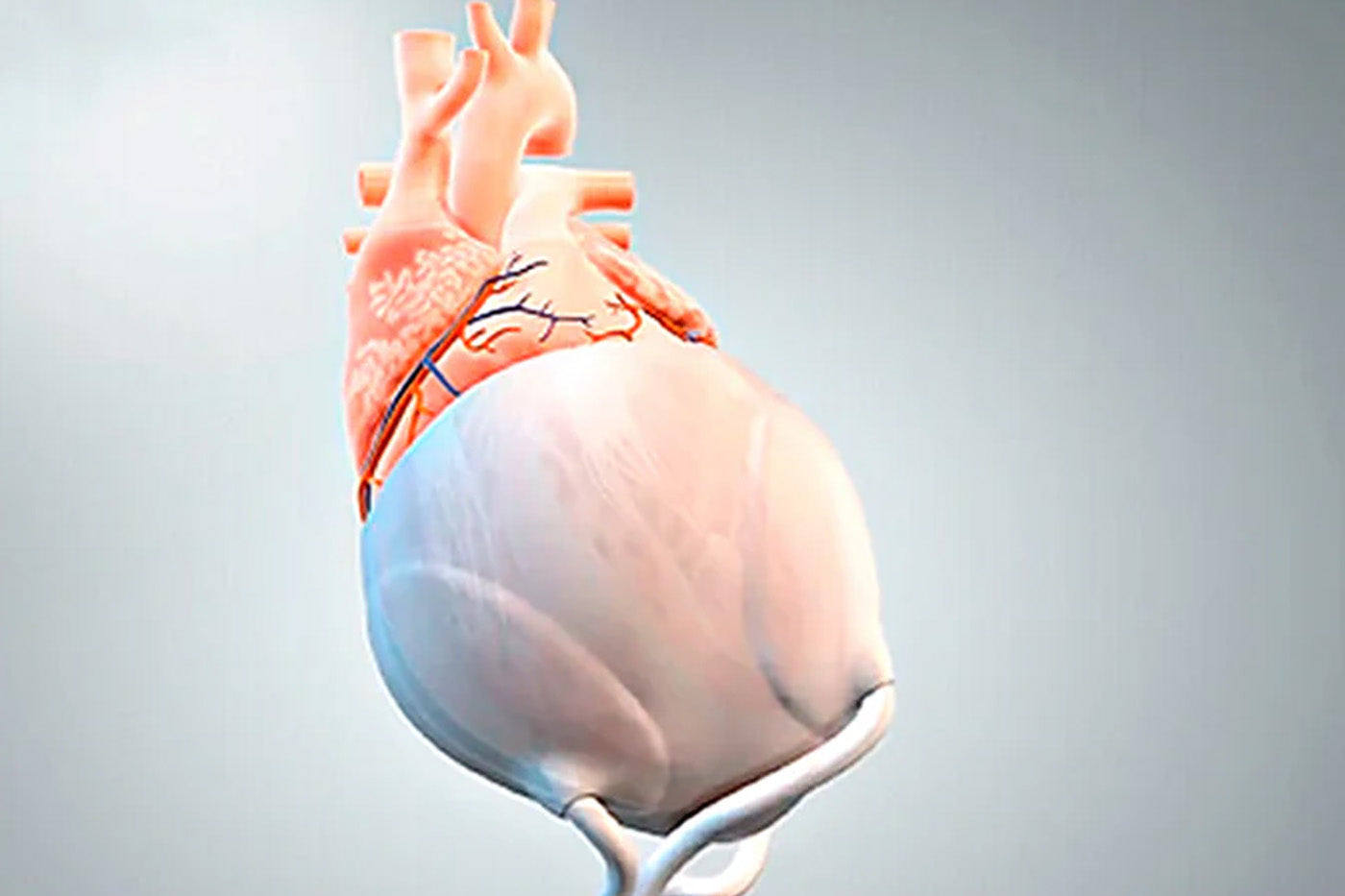
The first application of the biomimetic polymer will be the printing of a novel surface for an extravascular cardiac support system. The system, developed by Munich-based AdjuCor GmbH, is based on a patient-specific mechanical implant that is positioned entirely outside the bloodstream (extravascularly) in the pericardial cavity around the epicardial surface of both heart chambers. "A biomimetic pericardial replacement material would trigger only minimal immune responses, thus leading to a gentler healing phase. This could further shorten intensive care and hospital stays," explains cardiac surgeon and AdjuCor CEO Prof. Stephen Wildhirt.
On the road to market readiness
To be approved for clinical applications in the future, both the new photopolymers and the processing methods must meet extensive requirements. For the large-scale production of the photopolymers, the GMP guidelines (Good Manufacturing Practice) must be followed. These guidelines ensure the quality of the production processes and environment. pro3dure medical GmbH, Iserlohn, will establish the photopolymer upscaling process and resin synthesis in accordance with these GMP guidelines.
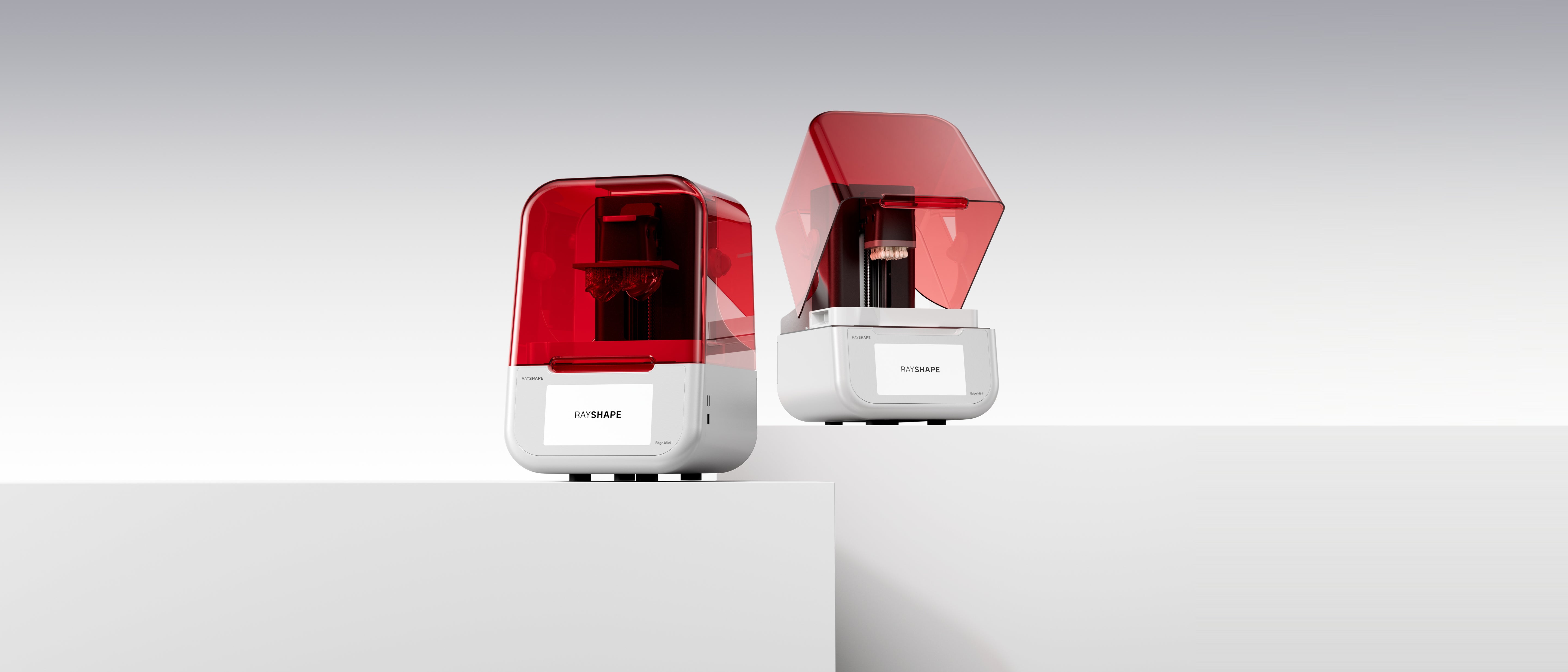
Young Optics Europe GmbH in Jena currently uses its self-developed 3D printers to process biocompatible photopolymers for medical devices in classes I and IIa. The PolyKARD project aims to establish, for the first time, a 3D printing system for the production of class III medical devices, which will also enable complete traceability of the raw materials used in their manufacture.
Holistic chemistry for new materials: The three-year PolyKARD project started in April 2019 and is funded by the VDI (Association of German Engineers). e.VThe project is supported by the BMBF (Federal Ministry of Education and Research) as a project sponsor within the framework of the funding measure "Material Innovations for Healthy Living: ProMatLeben – Polymers" (grant number: 13XP5087D). The partners will meet again on February 4, 2020, to present initial milestones. "We have already successfully synthesized and printed the first elastic photourethane resins from non-toxic starting materials," explains Wolfdietrich Meyer.
“In the future, we want to implement the holistic medical concept even more strongly in our chemistry. We want to develop more materials based on renewable raw materials for 3D printing and electrospinning that are biocompatible and can be processed with the highest precision. We are also keeping the component's life cycle and, if necessary, environmentally sound disposal in mind,” said Meyer.
The first application of the pericardial replacement material will be to produce a novel surface for an extravascular cardiac support system using 3D printing.© AdjuCor GmbH
| project | "Synthesis of a biomimetic pericardial polymer for cardiac applications" (PolyKARD) |
| Financial support |
BMBF | Material innovations for healthy living: ProMatLeben – Polymers |
| Project sponsor | VDI Association of German Engineers e.V. Duration: 03.2019 – 02.2022 |
| Funding ID number | 12XP5087D |
| partner | AdjuCor GmbH | Garching Fraunhofer Institute for Applied Polymer Research IAP Potsdam NMI Natural Sciences and Medical Institute | Reutlingen Young Optics Europe GmbH (Subsidiary of BURMS) | Jena pro3dure medical GmbH | Iserlohn |